Salem NH Property Taxes Explained for Massachusetts Buyers
August 13, 2026
August 13, 2026
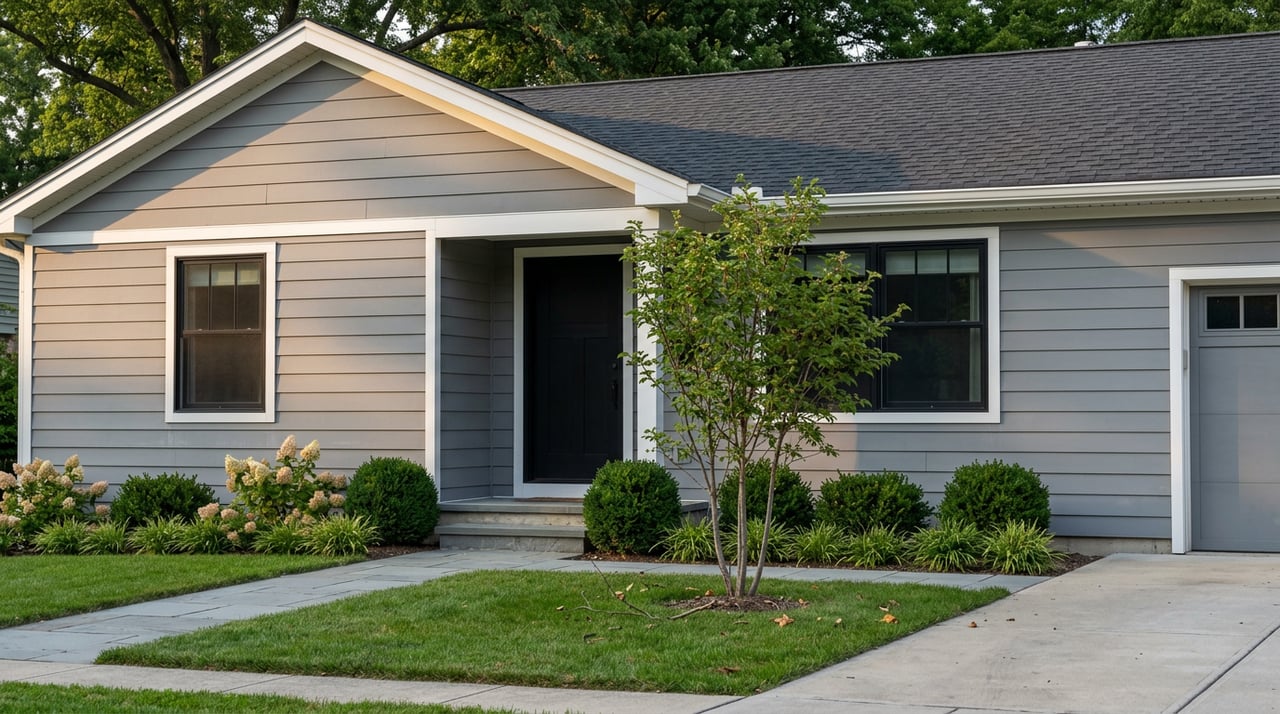
A buyer moving from Massachusetts to Salem, New Hampshire usually does the same napkin math. No state income tax. No sales tax. Compare that to a Salem listing's tax rate against a Massachusetts town's tax rate, and New Hampshire wins.
Then the actual bill arrives, and the number doesn't match what the rate implied. That gap isn't a mistake on anyone's part. It's how Salem's tax system is built, and understanding it before you close matters more than knowing the rate.
Salem's 2025 property tax rate is $18.16 per $1,000 of assessed value. If you bought a home for $610,000, it's tempting to multiply those two numbers and land on an annual bill. That math is wrong, and the gap is large enough to change how a buyer should compare listings.
Salem assesses property at approximately 70.5% of market value, the ratio the town certified for 2025. A $610,000 home isn't taxed on $610,000. It's taxed on roughly $430,000 of assessed value. That's the number the rate actually multiplies against.
Here's what that looks like in practice, using the town's own published example:
| Market value | Assessed value (70.5% ratio) | Rate | Estimated annual tax | |
|---|---|---|---|---|
| Salem, NH example | $610,000 | ~$430,000 | $18.16/$1,000 | ~$7,810 |
That $7,810 figure comes directly from the town's presentation on its 2025 tax base, not a back-of-envelope estimate. If you skip the assessment ratio step and apply the rate straight to a listing price, you'll overestimate the bill by a wide margin, or you'll compare Salem's rate to a Massachusetts town's rate as if the two numbers mean the same thing. They don't. Every town in New Hampshire sets its own assessment ratio, and comparing raw rates across towns without adjusting for that ratio is comparing two different units of measurement.
Here's the part that catches buyers mid-transaction. Salem's last town-wide revaluation was in 2021, and state law requires a full revaluation at least every five years. The next one lands in 2026, and it can move both the assessed value and the ratio at the same time.
The town is explicit about how the billing works during a revaluation year: the first tax bill, mailed in spring, is an estimate based on half of the prior year's taxes; the second bill, mailed in November, reflects the newly certified rate and is due in early December. If you're using this year's ratio to sanity-check a listing in the second half of 2026, you're working from a number that could shift by the time your first full tax bill arrives.
This isn't hypothetical. The last time Salem revalued, in 2021, assessments rose to reflect market values and the rate reset lower, and it has climbed $2.18 per $1,000 since, reaching $18.16 in 2025. Total taxes collected didn't fall in 2021. Only the rate per $1,000 changed because the base it was spread across got bigger. That's the mechanism worth understanding before you compare Salem to anywhere else, because it's about to happen again.
Salem's most visible growth story is Tuscan Village, the mixed-use district that replaced the old Rockingham Park racetrack off Route 28. The property includes Mass General Hospital's medical offices, the Hanover, Corsa and Caro apartment buildings, The Artisan Hotel, Tavern in the Square, and a Whole Foods Market still under construction. The site's assessed value grew from roughly $31 million in 2021 to more than $463 million in 2025, generating about $9.87 million in property tax revenue in 2025, roughly 7.3% of the town's entire tax levy.
Given numbers like that, it's reasonable to expect Salem homeowners' bills to have gone down. They haven't, and Town Manager Joe Devine has said as much directly.
"Tuscan is not finished, I think we are going to see good growth there."
The reason growth doesn't translate into lower bills is that Salem doesn't control most of what's on your bill. The town controls only the municipal portion, about 32 cents of every dollar you pay. The rest is split between local school spending, which voters at the school district level approve separately, the state education tax set in Concord, and a county portion set by Rockingham County. Tuscan Village's added value spreads the municipal cost over a bigger base and slows how fast the rate climbs. It doesn't touch the roughly two-thirds of your bill that Salem never had authority over in the first place.
The town's own math backs this up. Without Tuscan Village's assessed value, the 2025 rate would have needed to be approximately $19.73 per $1,000 instead of the actual $18.16, a difference of about $675 a year on a home assessed near $430,000. That's real relief. It's also the ceiling on what this kind of growth can do. Development slows the rate of increase. It was never going to reverse it, and town councilors have publicly acknowledged that residents were led to expect otherwise.
It's worth being clear that this mechanism is specific to how Salem's tax base is built, not a universal New Hampshire pattern. Windham, a few miles up Route 28 and also served by our team, carries a 2025 total tax rate of $14.15 per $1,000, noticeably lower than Salem's $18.16. Windham doesn't have a Tuscan Village-scale commercial base absorbing part of the load, so its rate reflects a different balance of residential versus commercial assessed value. Comparing Salem's rate to Windham's rate, or to a Massachusetts town's rate, only tells you something useful once you know what each rate is actually being multiplied against and who set the pieces underneath it.
The income tax and sales tax comparison that draws buyers north is real. Massachusetts levies a 5.0% personal income tax and a 6.25% sales and use tax. New Hampshire has neither, and the state's remaining tax on interest and dividend income is being phased out, dropping to 1% in 2026 before disappearing entirely in 2027. For a household with significant wage income or investment income, that difference is substantial and durable.
What it isn't is a substitute for understanding how Salem's property tax bill actually gets built. A buyer weighing two similarly priced homes, one in Salem and one across the state line, needs the assessed value and ratio for the Salem property, not just the posted rate, to make a fair comparison. And anyone closing on a Salem property should also budget for New Hampshire's real estate transfer tax, assessed at $15 per $1,000 of the sale price and split evenly between buyer and seller, a closing line Massachusetts buyers don't always anticipate.
If Tuscan Village keeps growing, will my Salem tax bill eventually go down? Based on the town's own analysis, no. Additional development expands the base the rate is spread across, which limits how much the rate has to rise as school, county and state costs increase. It has not produced, and isn't projected to produce, an outright decrease in what current homeowners pay.
How do I estimate the tax bill on a specific Salem home I'm considering? Multiply the listing price by the current assessment ratio to get an estimated assessed value, then apply the current rate per $1,000. Confirm both figures on the town's assessing page before you rely on them, since both can change during a revaluation year.
Does the 2026 revaluation affect homes currently under agreement? The revaluation resets assessed values and the rate together, and the town has said additional details will be posted as the process moves forward. If you're under contract during this window, ask your agent to confirm which tax year's assessment applies to your specific closing date.
Property tax mechanics like these are exactly the kind of detail that gets lost in a portal listing but matters once you're comparing real numbers across town lines. If you're weighing Salem against a Massachusetts town, or trying to understand what a specific listing will actually cost to own, Key Team | Compass can walk through the assessed value, the ratio and the timing together before you make an offer. Get Your Free Home Valuation to start with a clear picture of where you stand.
Stay up to date on the latest real estate trends.

Videos
Susan Monette | November 21, 2022
Key Team - Give where you live!

Videos
December 24, 2022
Key Team and friends met at Ellies Farmhouse in Methuen Massachusetts and surprised our waitress with a $1000 tip!

Videos
December 30, 2022
Thank you to everyone who attended our Holiday Event and donated a teen toy or pet toy to assist in the Windhams Helping Hands charity drive!

March 8, 2023
March 20, 2023
Are you preparing to sell your home in Northern Massachusetts or New Hampshire? If so, you'll want to make sure your home is staged and presented in the best possible … Read more
April 1, 2023
The hidden gem of New England! With its picturesque setting, easy access to major urban centers and transportation hubs, and unbeatable quality of living, Pelham offer… Read more
real estate
April 15, 2023
Over the last year, the housing market’s gone through significant change. While it’s still a sellers’ market, homes that are priced right are selling, and they get the… Read more
for sellers
April 29, 2023
The housing market’s been going through a lot of change lately, and there’s been uncertainty surrounding what will happen this spring. You may be wondering if more hom… Read more

Susan Monette | May 4, 2023
Join Us!
We build our business one relationship at a time and our philosophy is, IT’S ALL ABOUT YOU! This is your journey! We will work tirelessly on your behalf, our clients come first. Contact us today!
Key Team
Address
25 Indian Rock Road, Suite 4
Windham, NH 03087
14 Essex St, Andover 01810